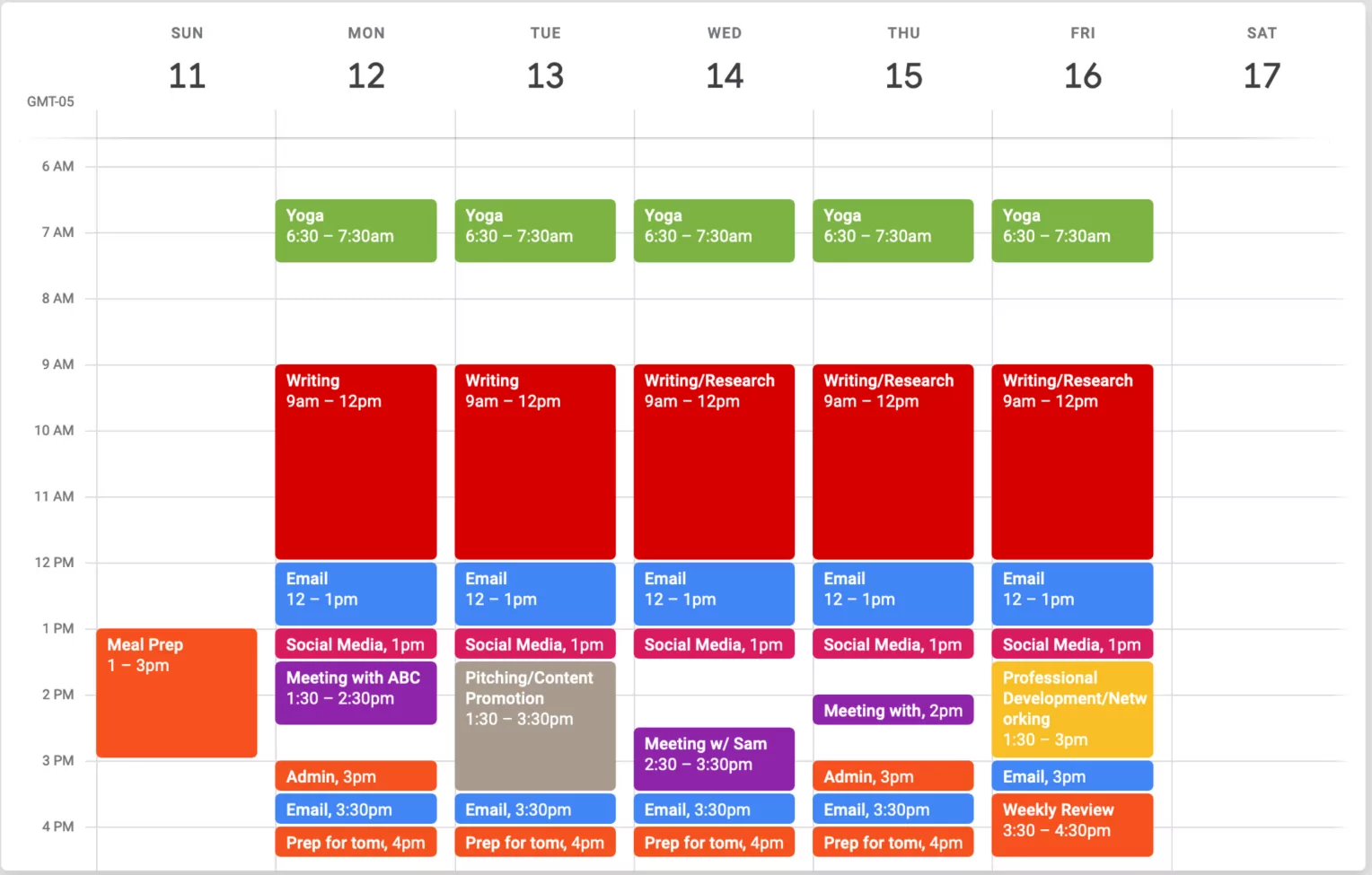
In a world filled with constant notifications, endless to-do lists, and the persistent pull of multitasking, achieving true focus can feel like an impossible task. We often end the day feeling busy but not productive, wondering where all the time went. If this sounds familiar, you’re not alone. The solution isn’t necessarily to work harder, but to work smarter. This is where the time blocking method comes in—a powerful scheduling technique designed to help you reclaim your focus, manage your time intentionally, and achieve significant results.
This comprehensive guide will walk you through everything you need to know about time blocking, from its core principles to practical steps for implementation. Get ready to transform your chaotic schedule into a clear roadmap for productivity.
What Exactly is the Time Blocking Method?
Time blocking is a time management strategy where you divide your entire day into specific blocks of time. Each block is dedicated to accomplishing a specific task or a group of related tasks. Instead of working from a reactive to-do list and deciding what to do next on the fly, you proactively assign every minute of your day a purpose. This includes not just your core work tasks but also meals, breaks, exercise, and even time for unexpected interruptions.
Think of it as creating a detailed budget for your time. Just as a financial budget tells your money where to go, a time-blocked schedule tells your minutes and hours where to go. This shift from a reactive to a proactive mindset is the cornerstone of its effectiveness.
Why is Time Blocking So Effective for Productivity?
The popularity of time blocking among high-achievers like Elon Musk and Bill Gates isn’t a coincidence. The method leverages several psychological principles that enhance focus and output.
- Combats Parkinson’s Law: This law states that “work expands so as to fill the time available for its completion.” By assigning a fixed time block to a task, you create a healthy sense of urgency, forcing you to focus on completing it within the designated timeframe rather than letting it drag on.
- Encourages Deep Work: Distractions are the enemy of productivity. Time blocking allows you to schedule long, uninterrupted periods for cognitively demanding tasks. This state of intense, distraction-free concentration is known as deep work, and it’s where high-quality, creative, and complex work gets done.
- Reduces Decision Fatigue: We make hundreds of small decisions every day, and each one depletes our mental energy. By planning your day in advance, you eliminate the constant “What should I do next?” question. This frees up valuable mental bandwidth that you can then allocate to more important tasks.
- Promotes Intentionality: Time blocking forces you to be realistic and intentional about how you spend your time. It makes you confront the finite nature of your day and prioritize what truly matters. It helps ensure that your important but not-urgent goals don’t constantly get pushed aside by urgent but unimportant distractions.
- Provides a Clear Record: Your completed schedule serves as a record of how you spent your time. This makes it easy to review your week, identify time-wasting activities, and adjust your schedule for better results in the future.
How to Get Started with Time Blocking: A 5-Step Guide
Getting started with time blocking is straightforward. All you need is a tool—a digital calendar, a physical planner, or even a simple notebook—and a commitment to the process.
- Brain Dump Your Tasks: Before you can schedule anything, you need to know what you need to do. Start by listing out everything on your plate. This includes work projects, personal errands, appointments, chores, and goals. Get it all out of your head and onto paper or a digital document.
- Prioritize Ruthlessly: You likely have more tasks than time, so prioritization is key. Use a framework like the Eisenhower Matrix to categorize tasks into four quadrants: Urgent & Important (Do now), Important & Not Urgent (Schedule), Urgent & Not Important (Delegate), and Not Urgent & Not Important (Eliminate). Your focus should be on scheduling the “Important & Not Urgent” tasks, as these are what drive long-term success.
- Estimate Time Accurately: For each task you plan to schedule, estimate how long it will take. Be realistic and even a little generous. It’s better to finish early than to constantly fall behind schedule. If you’re unsure, track your time for a few days to get a better baseline for how long different types of tasks typically take you.
- Build Your Schedule: Now it’s time to place your tasks into blocks on your calendar. Start with fixed appointments like meetings. Then, schedule your high-priority deep work tasks during your most energetic hours (for many, this is the morning). Fill in the rest with shallower work, administrative tasks, and personal activities. Crucially, schedule your breaks, meals, and a buffer block or two for unexpected issues.
- Review and Adapt: Your first time-blocked schedule won’t be perfect. At the end of each day or week, take a few minutes to review. What worked? What didn’t? Did you underestimate how long a task would take? Were you constantly interrupted? Use these insights to adapt and refine your schedule for the next day or week. Flexibility is crucial for long-term success.
Common Time Blocking Variations
While the core concept is simple, time blocking can be adapted to fit your personal style. Two popular variations are time boxing and task batching.
- Time Boxing: This is a more granular version where you set a fixed time limit (a “box”) for a single task and work on it with intense focus until the time is up. It’s especially effective for procrastinators or for large, intimidating projects that are easier to tackle in small, defined bursts.
- Task Batching: This involves grouping similar small tasks together and completing them in a single time block. For example, you could create a one-hour “communications block” to answer all your emails and return phone calls at once, rather than letting them interrupt you throughout the day. This reduces the mental cost of context-switching.
Tools for Effective Time Blocking
The best tool is the one you’ll consistently use. Here are a few popular options:
- Digital Calendars: Google Calendar, Outlook Calendar, and Apple Calendar are excellent choices. They are flexible, easily accessible across devices, and allow for easy color-coding and adjustments.
- Physical Planners: For those who prefer pen and paper, a high-quality daily planner with hourly breakdowns can be incredibly satisfying and effective.
- Dedicated Apps: Apps like Todoist, Trello, Asana, or specialized time blocking apps like Motion or Sunsama are designed to integrate task management with calendar scheduling, creating a powerful all-in-one productivity system.
Conclusion: Take Control of Your Time
The time blocking method is more than just a scheduling hack; it’s a philosophy of intentional living. By proactively deciding how you want to spend your most valuable resource—your time—you move from being a passive recipient of circumstances to the active architect of your day. It provides the structure needed for deep, meaningful work while also ensuring you make time for rest and personal priorities. The learning curve may require some patience, but the rewards of increased focus, reduced stress, and greater accomplishment are well worth the effort. Start small, be consistent, and get ready to unlock a new level of productivity.